We’ve all seen epoxy floors, but we wanted to ask: What if you didn’t just paint the floor? What if you actually terraformed your kitchen?
This conceptual build takes the idea of “cozy” to a tropical level. We aren’t just laying down a coating; we are building an ecosystem. Here is a step-by-step look at how this dream concept comes to life, from the concrete slab to the final glass-like finish.


Phase 1: The Canvas & The Brand
The Concept: Before a drop of resin hits the floor, the prep work is vital. In this concept, we strip the room down to the bare concrete. You can see the projection of the Original Cozy logo right on the dust—marking the territory.
- The “What If”: Imagine using a stencil to etch the logo faintly into the concrete sub-floor so that even if the ocean covers it, the brand DNA is buried underneath the sand forever.


Phase 2: Sculpting the Shoreline
The Concept: Most epoxy floors are flat. This one isn’t. We start by bringing in actual texture. We aren’t painting sand; we are laying sand.
- The Process: We dump mounds of textured substrate (conceptually, fine silica sand mixed with a bonding agent) onto the kitchen floor.
- The “What If”: We don’t level it perfectly. We intentionally create small dunes and ripples to mimic how the tide shapes the beach. This creates physical depth that will look incredible once the “water” is poured over it.
Phase 3: The Deep Blue Pour
The Concept: Once the shoreline is sculpted and sealed, it’s time to bring in the tide. This isn’t a thin coat of paint; this is a “flood coat.”
- The Process: The team suits up (full hazmat style because this is heavy-duty industrial resin). We pour gallons of deep teal and azure-tinted epoxy into the center of the room.
- The “What If”: We use a semi-translucent pigment. The goal is that where the epoxy is thickest (the middle of the kitchen), the water looks deep and dark. As it flows toward the sand, it naturally gets lighter, mimicking the gradient of a real ocean shelf.


Phase 4: Embedding the Ecosystem
The Concept: The devil is in the details. While the resin is still tacky, we treat the floor like a diorama.
- The Process: The team manually places sea shells, river stones, and pebbles right into the “transition zone” where the water meets the sand.
- The “What If”: We place the rocks strategically to create “turbulence” in the design. Later, when we add the white foam effects, we can make it look like the water is crashing specifically around these rocks. It turns the floor into a 3D art piece.


Phase 5: The “Clear” Cap and Foam Effects
The Concept: This is where the magic happens. We pour a final, crystal-clear layer of self-leveling epoxy over everything—the sand, the blue water, and the shells.
- The Process: Using a second bucket team, we pour the clear coat. This encapsulates the 3D texture, meaning the floor will be perfectly smooth to walk on, but visually, it will look like you are staring down through 3 inches of water.
- The “What If”: We use white metallic pigment and an air gun to blow “sea foam” across the top layer. By manipulating the air pressure, we create lacing effects that look exactly like crashing waves hitting the beach.


Phase 6: The Buff & Polish
The Concept: Once the cure is complete, the floor is hard as a rock, but it needs that “wet look.”
- The Process: We bring in the heavy industrial floor buffers. We are grinding down any microscopic imperfections in the top coat.
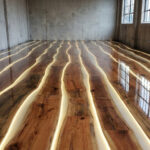
- The “What If”: We buff it to a mirror finish. The reflection of the windows and the kitchen island should be indistinguishable from the floor itself. It creates an infinity effect where the room feels twice as big.
The Final Reveal
The result is a kitchen that feels like a permanent vacation. The stark white modern cabinets contrast perfectly with the chaotic, organic beauty of the ocean floor.

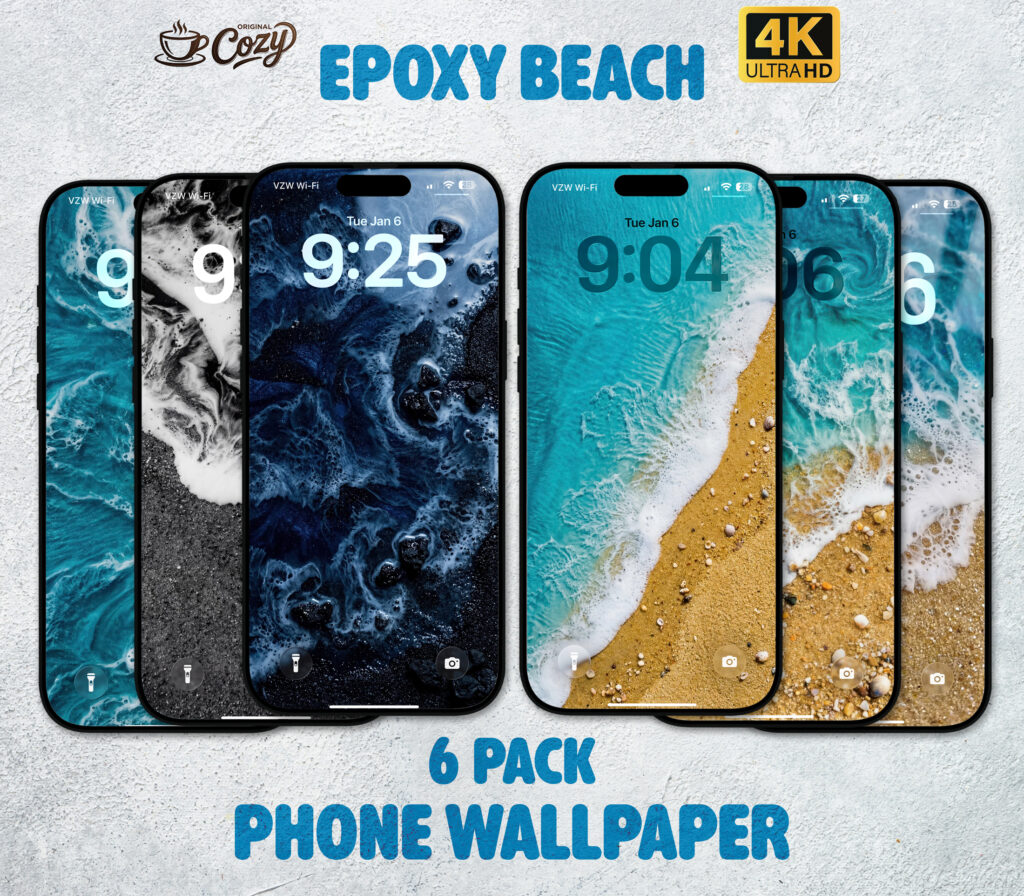
Check out our phone wallpapers with the Epoxy Beach theme on Etsy!